Showing posts with label Psychology. Show all posts

Friday, October 21, 2011

Worth Reading

Daniel Kahnemann, the psychologist who won the Nobel Memorial Prize in Economics in 2002 for his contributions to behavioral economics (challenging mainstream conceptions of rationality), has an interesting column in today's New York Times (here) on the "hazards of confidence." Here is an excerpt:
The confidence we experience as we make a judgment is not a reasoned evaluation of the probability that it is right. Confidence is a feeling, one determined mostly by the coherence of the story and by the ease with which it comes to mind, even when the evidence for the story is sparse and unreliable. The bias toward coherence favors overconfidence. An individual who expresses high confidence probably has a good story, which may or may not be true.

I coined the term “illusion of validity” because the confidence we had in judgments about individual soldiers was not affected by a statistical fact we knew to be true — that our predictions were unrelated to the truth. This is not an isolated observation. When a compelling impression of a particular event clashes with general knowledge, the impression commonly prevails. And this goes for you, too. The confidence you will experience in your future judgments will not be diminished by what you just read, even if you believe every word.

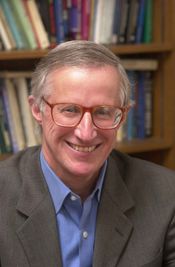
Meanwhile, future Nobel laureate (for contributions to environmental and energy economics), William Nordhaus has an interesting essay (masquerading as a book review) on energy in the New York Review of Books (here). Here's an excerpt:
If we look at actual taxes in the energy sector, they are far below the calculated external costs. In 2007, for which we have complete data, after discounting the net of energy subsidies, the money paid in total federal energy taxes was $21 billion, or less than one tenth of the level necessary to price energy at its social costs. Virtually all of these taxes were gasoline taxes—devoted to building roads so that cars could drive faster and farther! So Graetz is correct in his assertion quoted above that the US has failed to charge the full cost of its energy consumption; it is not even close.

A second point is that environmental taxes can play a central role in reducing the fiscal gap in the years to come. These are efficient taxes because they tax “bads” rather than “goods.” Environmental taxes have the unique feature of raising revenues, increasing economic efficiency, and improving the public health.

Tuesday, December 7, 2010

Behavioral Law and Economics Symposium

Truth on the Market, a law and economics blog, is hosting a symposium called "Free to Choose? A Symposium on Behavioral Law and Economics." Contributors to the symposium include Richard Epstein, Claire Hill, David Friedman, Larry Ribstein, Henry Manne, Geoffrey Manne, and several other notable scholars. The contributions are thought-provoking and quite useful for anyone interested in the subject. You can read all of them here.

Several of the contributors have noted, quite rightly, that behavior law and economics so far lacks a sufficient theoretical basis for displacing conventional approaches to law and economics. This is a point Richard Posner noted in a 1998 article in the Stanford Law Review ("Rational Choice, Behavioral Economics, and the Law"). However, I think such complaints miss the point of behavioral law and economic studies, which is not so much to displace conventional theories and assumptions of rationality but to enrich and improve them. As Cass Sunstein (currently head of the Office of Information and Regulatory Affairs in the President's Office of Management and Budget) observed in a 1999 article in the American Law & Economics Review ("Behavioral Law and Economics: A Progress Report"):
[I]t is unproductive to see a general struggle between economic analysis of law and behavioral law and economics. The question is what kinds of assumptions produce good predictions about the effects of law, and this will vary with context. Sometimes the simple assumptions of conventional analysis will work entirely well; sometimes it is necessary to introduce complications by, for example, saying a bit more about what is counted in the utility function (such as a desire to be treated fairly, and willingness to punish those who act unfairly), or incorporating bounded rationality.
Sunstein's reference to "bounded rationality" is a useful reminder that the challenge to the conventional rational actor model is not a new one. The Nobel laureate Herbert Simon coined that phrase back in the 1950s. Since then, progress has been made, particularly by the likes of Daniel Kahnemann, Amos Tversky, Richard Thaler, and Sunstein himself, in defining and assessing various ways in which individuals regularly and often predictably deviate from the standard rationality assumption in decision making. But their work may be less of a threat to conventional economic theories than is often supposed. No one is arguing, for instance, that incentives (including prices) do not matter.

Sunday, November 28, 2010

Thaler on Wrong Scientific Beliefs

Over at The Edge, University of Chicago Business School Professor Richard Thaler, coauthor with Cass Sunstein of the influential book Nudge (Yale 2008), has raised an interesting question for regular Edge contributors:
The flat earth and geocentric world are examples of wrong scientific beliefs that were held for long periods. Can you name your favorite example and for extra credit why it was believed to be true?
I am not a contributor to The Edge, but I nevertheless sent Thaler the following message:
Already a couple of respondents have correctly indicated Newtonian gravity as a “wrong scientific belief.” Interestingly, it’s a wrong scientific belief that still seems to be treated as true, not by physicists of course, but by large segments of the public. I suspect there are two reasons for this: (1) gravity is both intuitive and conforms to our “common sense” of the world (of course, common sense is often treated as a infallible guide to judgment, but often is misleading); and (2) Newtonian gravity is only falsified at very high speeds, which none of us experiences. Thus, while Newton’s theory of gravity is scientifically false, it seems experientially “true.”

Long before Newton, when Aristotle’s “scientific” theories held sway for centuries, it was thought that objects move faster as they approach the earth because they sensed that they were approaching “home,” i.e., where they belonged. This theory, too, made some intuitive sense if one also accepted Aristotle’s belief that vacuums were impossible.

More generally, my sense is that all scientific theories, like all religious theories, are not only about people trying to comprehend the mysterious world and universe in which we live, but to establish regularities so as to be less frightened by the world and attain some (true or false) psychological equilibrium. The need for some such equilibrium is innate.