Showing posts with label Political Science. Show all posts

Saturday, December 10, 2011

Mancur Olson's "Logic of Collective Action" Encapsulated in Two Concise Sentences Written 200 Years Earlier

Mancur Olson's Logic of Collective Action (Harvard 1965) is rightly celebrated as one of the most important works of political-economy in the past century. Among other things, it is a foundation stone of public choice theory. But did you know that the main thesis of Olson's 170-page book was expressed in just two sentences written 200 years earlier?

Here's David Hume, from the Treatise on Human Nature [1739-40], Book 3, Part 2, Sec. 7, p. 538 (1978):

Two neighbours may agree to drain a meadow, which they possess in common; because ‘tis easy for them to know each other's mind; and each must perceive, that the immediate consequence of his failing in his part, is, the abandoning the whole project. But ‘tis very difficult, and indeed impossible, that a thousand persons shou'd agree in any such action; it being difficult for them to concert so complicated a design, and still more difficult for them to execute it; while each seeks a pretext to free himself of the trouble and expence, and wou'd lay the whole burden on others.
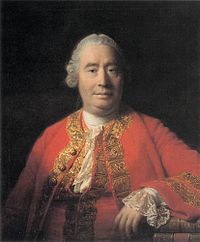
Of course, what Hume doesn't provide and Olson does is a clear implication of the potential of minoritarian bias in political processes to rival, or even exceed, the problem of majoritarian bias which was pretty much the sole concern of political theorists of democratic republicanism prior to the second half of the twentieth century.

Friday, December 9, 2011

Newt Gingrich Often Strayed from Conservative Beliefs

At Los Angeles Times, "Gingrich's record belies his conservative image":

For months, many Republicans have cast about for an alternative to Mitt Romney, decrying him as insufficiently conservative. Now they appear to have settled on a new front-runner — Newt Gingrich — who is no more conservative than Romney.

Both men have parted company with the party's most active voters on many of the same issues. Both backed requiring individuals to purchase healthcare insurance. Both supported the Wall Street bailout known as TARP and government subsidies for ethanol production.

Both agreed that human activity is contributing to climate change (though each has backtracked in recent months). In the past, both supported trading systems designed to cap carbon emissions. Gingrich has favored research using stem cells from fertility clinics, putting him to the left of Romney on that issue.

This year, Gingrich undercut his own candidacy by criticizing a House GOP plan to restructure Medicare as "right-wing social engineering" — though he pushed for a similar plan when he was House speaker in the mid-1990s. But unlike Romney, who supports moving to Medicare vouchers, Gingrich now favors letting seniors remain in the current system, a stance that puts him more in line with Democrats.

For some GOP voters it may come down to image: Gingrich, who boasts that he is more conservative than Romney, forged his by leading a partisan revolt in 1994 that brought Republicans to power in the House of Representatives for the first time in 40 years. And some Republicans have chosen to forgive his ideological straying because they appreciate his lacerating tone, far more brittle than Romney's.

Like other longtime politicians, Gingrich, 68, has evolved considerably over the years, shifting rightward with his party. He started out as a liberal Republican, working for Nelson Rockefeller's 1968 presidential campaign against Richard Nixon (there were few Republicans of any stripe in the South at the time, and Gingrich, who had recently moved to Louisiana, filled a void in the Rockefeller campaign there). His shift has caused some awkwardness: Just this week, Gingrich said in a CNN interview that he regretted his 1979 vote to create the federal Department of Education, a target for elimination by many conservatives....

His rivals for the GOP nomination argue that Gingrich's record doesn't match his conservative image. Rep. Ron Paul, after cataloging what he deemed to be repeated betrayals by Gingrich and Romney, said that there's "not a dime's worth of difference" between the two men. Rep. Michele Bachmann calls them "the great pretenders."

The trailing candidates are likely to amplify their critiques in a televised debate Saturday night, when Gingrich will for the first time defend his position as the clear GOP front-runner.

Sunday, December 4, 2011

Can France and Germany Keep the Euro Alive?

At Telegraph UK:

Can Germany and France reach agreement on radical new rules that would mean a loss of sovereignty over fiscal policy for euro nations - and can they do it in time to save the single currency?

On the same day that the world's main central banks took emergency action to prevent a global financial crash caused by the eurozone crisis and as France warned that war could again return to Europe, a short film was released.

The slick computer-generated imagery shows a beautiful woman coming to life from the frieze of an ancient Greek vase: she is Europa.

Using video technology, the mythical goddess of ancient Greece morphs into an attractive real-life woman wandering magical bridges that link the European continent.

Last Wednesday's film, a seven- minute "informational" from the EU to mark 10 years of the euro, is accompanied by a reassuring female voice-over telling viewers that "Europe inspires hope".

In an unintentionally surreal touch, the film was released at the same time that Alain Juppe, the French foreign minister, warned that the euro's looming collapse could lead to war. On the same day, others were equally downbeat. Herman Van Rompuy, the EU's president, admitted that the eurozone debt crisis had become "systemic" and "full blown". Enda Kenny, Ireland's prime minister, said: "There is a real and present sense of danger."
Continue reading.

PREVIOUSLY: "German Power to Shape Europe's New Rules."

Saturday, December 3, 2011

German Power to Shape Europe's New Rules

It's interesting that Angela Merkel is so determined to preserve the Eurozone, even if that means making structural changes that weaken her European partners. The alternative is a collapse of the single currency and perhaps the disintegration of the European Union. The EU began as an effort to tie down France and Germany in a web of mutual cooperation and multilateral institutions. Germany now is the leading state working to prevent a return to balance of power politics on the continent. Strange how things work like that, but in the post-WWII era, no other political regime has undergone a great cultural change than Germany.

See Los Angeles Times, "Germany's hand will be uppermost as Europe writes new fiscal rules."

More on the John Mearsheimer Anti-Semitism Controversy

One of the better, more concise discussions I've read on this, at Counterpoint, "From the Editors: On the Controversy of John Mearsheimer" (via Instapundit).

And from Pejman Yousefzadeh, "It Is Time for John Mearsheimer to Go."

I wrote on this here: "The Tragedy of John Mearsheimer."

The Neocon Rush to War Against Iran

From Jacob Heilbrunn, at National Interest:
Is Iran a threat to America? Or is it a fading power? The Iranian storming of the British embassy should not be interpreted as a sign of growing radicalism in Iran but as testament to the weakness of the regime. It has nothing in common with the 1979 takeover of the American embassy. There is no mass support inside Iran for attacking the United Kingdom. The calls in the Iranian parliament for "death to Britain" have an obligatory feel to them.

Yet the possiblity of Iran acquiring nuclear weapons has prompted a number of neoconservatives to maintain that it's imperative to launch a strike against it. Max Boot's column in the Los Angeles Times is a case in point. Paul Pillar points to the abuse of Nazi analogies in his post today. But Boot's column can be questioned on other grounds as well.

What caught my eye were the other historical analogies that Boot made. He asks why the West remained passive not just during the rise of Nazi Germany, but also
While the Soviet Union enslaved half of Europe and fomented revolution in China in the late 1940s? And, again, while Al Qaeda gathered strength in the 1990s? Those questions will forever haunt the reputations of the responsible statesmen, from Neville Chamberlain to Bill Clinton.
Continue reading.

Heilbrunn is right to take after Boot for that misguided analogical turn, although he's kidding himself if he really thinks Iran's an imaginary threat. See my earlier entry, "Melanie Phillips: Britain Impotently Warns Iran of 'Serious Consequences'."

Gregory McNeal on Targeted Killing and Collateral Damage in U.S. Drone Warfare Operations

Gregory McNeal is Associate Professor of Law at Pepperdine University School of Law. Professor McNeal emailed me yesterday with a heads up on his new essay at the Social Science Research Network, "The U.S. Practice of Collateral Damage Estimation and Mitigation." And he's got a abbreviated version of the argument at Lawfare. An excerpt:
Much of the commentary about air launched targeted killing–especially the commentary that focuses on a “video game” style of warfare with unaccountable geographically remote pilots dropping bombs at their own discretion–simply does not describe the reality of current combat operations (I directly address the false claims about targeted killing in a forthcoming book chapter). To highlight one example of the reality I describe versus commentary we typically read, just consider the fact that in Afghanistan since at least June 2009, all air-to-ground operations are pre-planned operations unless troops are in an emergency situation requiring close air support (CAS), close combat attack (CCA) or the pilot is acting in self-defense. In both CAS and CCA in Afghanistan, the pilot may not deploy a weapon without ground commander direction, usually through a Joint Terminal Attack Controller (JTAC) (a JTAC is a person who accompanies ground forces and is specifically trained to direct accurate close air support to engage enemy targets while reducing collateral damage and civilian casualties). The pilot’s only discretion in current operations is to decide not to release a weapon, in other words the ground commander owns the battlespace not the drone pilot. Furthermore, Air Force leaders repeatedly emphasize to their pilots that they will not be disciplined for returning to base with all of their bombs on their plane. Air Force leadership will even support the decision of pilots not employ a weapon, even if that decision directly contravenes the orders of the ground commander. This reality is a far cry from the free fire zone of “video game” warriors described by many drone critics.

Because targeted killing operations by UAV are not CAS or CCA, they are pre-planned operations, and as such must be subjected to the military’s rigorous collateral damage methodology. That methodology is grounded in scientific evidence derived from research, experiments, history, and battlefield intelligence, and is designed to adapt to time-critical events. The CDM is a planning tool that assists commanders in mitigating unintended or incidental damage or injury to civilians, property and the environment and aids them in assessing proportionality and in weighing risks to collateral concerns. In the context of targeted killing, the CDM takes into account every conventional weapon a UAV could carry.

The first step in the military’s collateral damage estimation process requires military commanders and their subordinates to ensure that they can positively identify, with reasonable certainty, that the object or person they want to affect is a legitimate military target (in the case of persons, one who is directly participating in hostilities). In targeted killing operations, the process of positively identifying a target means that commanders and their subordinates are focusing principally on the identity of the target. This is an intelligence-heavy task that relies on the collective effort of the intelligence community (both military and civilian) to vet and ensure the validity of the target in accordance with IHL and the ROE. Before engaging in an operation, military personnel must inform a commander (or “strike approval authority”) of the assumptions and uncertainties associated with information provided for the operation, including the time sensitive nature of any intelligence relied upon. In practice, what this means is that if positive identification of a target fails, no operation will take place. This is so because in U.S. practice, positive identification satisfies the requirement of ensuring that a target has the status of a legitimate military objective. When doubt arises as to whether an object holds civilian status, there exists a presumption that it does, hence the requirement of positive identification in U.S. operations.
Continue reading.

Also, see the response from Benjamin Wittes, at Lawfare, "Gregory McNeal on U.S. Targeting Standards." And from Kenneth Anderson, at Volokh, "Gregory McNeal on US Military Targeting Processes."

RELATED: A blast from the past. See Colin H. Kahl, at International Security, "In the Crossfire or the Crosshairs? Norms, Civilian Casualties, and U.S. Conduct in Iraq."

Thursday, December 1, 2011

Europe at the Brink

A great analysis at yesterday's Los Angeles Times, "In Europe debt crisis, markets and masses wait for Merkel to blink." And at New York Times, "Money Flows, but What Euro Zone Lacks Is Glue."

Der Spiegel

And now, at The Economist, "The euro zone: Is this really the end?":
EVEN as the euro zone hurtles towards a crash, most people are assuming that, in the end, European leaders will do whatever it takes to save the single currency. That is because the consequences of the euro’s destruction are so catastrophic that no sensible policymaker could stand by and let it happen.

A euro break-up would cause a global bust worse even than the one in 2008-09. The world’s most financially integrated region would be ripped apart by defaults, bank failures and the imposition of capital controls (see article). The euro zone could shatter into different pieces, or a large block in the north and a fragmented south. Amid the recriminations and broken treaties after the failure of the European Union’s biggest economic project, wild currency swings between those in the core and those in the periphery would almost certainly bring the single market to a shuddering halt. The survival of the EU itself would be in doubt.

Yet the threat of a disaster does not always stop it from happening. The chances of the euro zone being smashed apart have risen alarmingly, thanks to financial panic, a rapidly weakening economic outlook and pigheaded brinkmanship. The odds of a safe landing are dwindling fast.
Keep reading.

The authors argue that the European Central Bank needs to provide massive liquidity, and fast.

IMAGE CREDIT: Der Spiegel, "Euro Zone on the Brink: A Continent Stares into the Abyss."

Early Results in Egypt Show Mandate for Islamists

At New York Times:

CAIRO — Islamists claimed a decisive victory on Wednesday as early election results put them on track to win a dominant majority in Egypt’s first Parliament since the ouster of Hosni Mubarak, the most significant step yet in the religious movement’s rise since the start of the Arab Spring.

The party formed by the Muslim Brotherhood, Egypt’s mainstream Islamist group, appeared to have taken about 40 percent of the vote, as expected. But a big surprise was the strong showing of ultraconservative Islamists, called Salafis, many of whom see most popular entertainment as sinful and reject women’s participation in voting or public life.

Analysts in the state-run news media said early returns indicated that Salafi groups could take as much as a quarter of the vote, giving the two groups of Islamists combined control of nearly 65 percent of the parliamentary seats.

That victory came at the expense of the liberal parties and youth activists who set off the revolution, affirming their fears that they would be unable to compete with Islamists who emerged from the Mubarak years organized and with an established following. Poorly organized and internally divided, the liberal parties could not compete with Islamists disciplined by decades as the sole opposition to Mr. Mubarak. “We were washed out,” said Shady el-Ghazaly Harb, one of the most politically active of the group.
Also, from Barry Rubin, "Flash: What, Me Pessimistic? Egyptian Election Outcome is Worse Than I Expected."

Wednesday, November 30, 2011

6 Ideas for the Ash Heap of History

From Tyler Cowen, at the new special issue of Foreign Policy, "100 Top Global Thinkers 2011":
4. The eurozone is for pretty much everyone in Europe. By now, it should be obvious that a 17-nation eurozone was a bad idea. The only questions left are how many countries do not belong and how painful will it be to push out those that shouldn't be there. Whether or not you think the current patchwork bailouts will work (probably not, see No. 5 below), just what, precisely, are those bailouts fighting to defend? No one knows anymore. The peripheral countries, like Greece and Portugal, used to think that if they suffered through a bit of deflation from eurozone membership, they still could benefit from the lower borrowing rates enjoyed by stronger economies like Germany. Now they're getting the deflationary pressures, stronger than ever before, but without the low borrowing rates. So what's in it for them to remain? What's in it for Germany and Finland and the Netherlands? It's hard to see.

Saturday, November 19, 2011

"Property in Land and Other Resources" Is Now Available for Pre-Order

My new book, co-edited with Elinor Ostrom, Property in Land and Other Resources (Lincoln Institute 2011), is now available for pre-order at Amazon.com (here) for just $28.63. That's $6.37 (18%) off the cover price. According to the Amazon listing, the book will be published on November 28.

You can also purchase the book directly from the Lincoln Institute of Land Policy (here).

You can see the full Table of Contents, read Doug North's forward, and read Lin and my Introduction to the book here.

Saturday, January 29, 2011

Quiggin on Egypt

Over at Crooked Timber (here), the always thoughtful John Quiggin explores large, important, and very complex questions arising from the developing political situation in Egypt. The questions he raises, by themselves, are reminders to beware of the instant analyses and simplistic advice coming from the editorial pages of US newspapers.

Some of that advice could turn out to be correct, but there is little reason to believe that the the authors have either amassed and digested all of the significant facts or worked through in sufficient detail the long-run implications of alternative US positions.