Showing posts with label Natural Resources. Show all posts

Monday, December 5, 2011

Economists Urge President Obama to Designate More Federally Protected Lands in the West to Stimulate the Economy

An impressive list of 100 economists, including (among many others), Kenneth Arrow, Robert Solow, Joseph Stiglitz, Roger Noll, Eban Goodstein, Deirdre McCloskey, Richard Norgaard, Thomas Michael Power, and Richard Zerbe, signed the letter, which argues that "federal protected public lands," including national parks, national monuments, and wilderness areas, "are essential to the West's economic future" (emphasis added).
In the West ... public lands play a pivotal role in attracting and retaining people and businesses. This is the case for all sectors, including manufacturing.
The rivers, lakes, canyons, and mountains found on public lands serve as a unique and compelling backdrop that has helped to transform the western economy from a dependence on resource extractive industries to growth from in-migration, tourism, and modern economy sectors such as finance, engineering, software development, insurance, and health care.
The full letter with signature page is here.

Sunday, September 25, 2011

Common Pool Resources (CPRs) v. Common Property Regimes (CPRs)

In the social science literature, the abbreviation CPR stands for two related, but distinct, phrases that are too often conflated: common-pool resources and common-property regimes. Yesterday, at a conference at NYU Law School on "Convening Cultural Commons" (about which I previously posted here), a small and short debate arose between two scholars I greatly admire, Lin Ostrom and Carol Rose, about the two types of CPRs. Carol, if I understood her correctly, suggested that the distinction is insignificant because common-pool resources inevitably are defined as such within an institutional context. Lin responded that resource attributes such as relative subtractability and excludability, are not institutionally determined and play a crucial role in determining whether or not a resource is a commons.

Because the exchange was brief and, basically, an aside to other issues being addressed at the time, I hesitate to make too much of it. But I must say I find Carol's position baffling. An institutional structure - whether common-property, individual private-property, or some other management system - obviously affects rates of  extraction/resource-depletion. But it does not affect subtractability which depends exclusively on ecological circumstances.* Ecological circumstances can/should affect the applicable institutions, for reasons explained by Hardin (1968), Demsetz (1967) and many others. But institutions don't alter the fundamental ecological conditions. Put differently, a subtractable resource remains subtractable whether the current rate of demand, under prevailing institutional structures, is either zero or very high. (This is why Ostrom's social-ecological systems framework quite rightly pays as much attention to ecological conditions as to institutions.)

*Institutions can affect excludability, if only indirectly, by affecting incentives to innovate technologies that, themselves, can enhance excludability, at least with respect to some resources. Thus, the invention of barbed wire in the mid-19th century enhanced excludability of lands in the western US, where lack of timber had previously made enclosure too expensive (Anderson and Hill 1975). 

Saturday, September 17, 2011

Studying Climate Change Impacts on Snowmelt-dependent Agricultural Systems in the Western US and Kenya

The NSF recently approved $1.2 million in funding for the project, on which I am a co-principal investigator, along with IU colleagues Elinor Ostrom and Tom Evans, plus Krister Andersson from Colorado and Kelly Caylor from Princeton. The IU News release on the award is here. I hope to learn a lot working with this terrific group of  natural and social scientists, and expect that our study will be valuable for thinking ahead about (re)structuring water allocation institutions in the face of changing environmental circumstances.

Wednesday, September 14, 2011

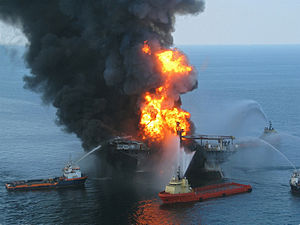
Joint Investigation Team Releases Final Report on the Causes of the Deepwater Horizon Disaster

Both volumes, as well as appendices, of the report can be found here, along with recommendations for averting such disasters in the future.

Tuesday, September 6, 2011

Muller, Mendelsohn and Nordhaus on National Environmental Acounts

The new issue of the American Economic Review showed up in my mailbox this afternoon. It includes a fascinating article by Nicholas Z. Muller, Robert Mendelsohn and William Nordhaus on "Environmental Accounting for Pollution in the United States Economy." Here is the abstract:
This study presents a framework to include environmental externalities into a system of national accounts. The papers estimates the air pollution damages for each industry in the United States. An integrated-assessment model quantifies the marginal damages of air pollution emissions for the US which are multiplied times the quantity of emissions by industry to compute gross damages. Solid waste combustion, sewage treatment, stone quarrying, marinas, and oil and coal-fired power plants have air pollution damages larger than their value added. The largest industrial contributor to external costs is coal-fired electric generation, whose damages range from 0.8 to 5.6 times value added.
It should be noted that the fact that an industry's total air pollution damages exceeds its value added does not imply that the industry should not exist. As the authors duly note, if externalities were internalized, prices would change. However, damages in excess of value added does indicate that those industries are under-regulated; that is, at current levels of regulation, marginal damages from pollution emissions still exceed marginal abatement costs.

Several countries, including Japan and the UK, already incorporate environmental damage into their national accounts. It's about time the US did likewise. This article provides valuable insights into how the federal government might do so.

Friday, February 25, 2011

Thinking about Time

Over at Legal Planet (here), Dan Farber engages in what he calls a "whimsical thought experiment" calculated to reduce the environmentally significant discrepancy between geological time and time as humans tend to experience it:

As a thought experiment, imagine changing the basic unit from a year to millenium, which we could abbreviate as  an M (pronounced “em”).  Then we’d have the following system of units:

     1 M is a thousand years.

     1 deci-M is a century.

     1 centi-M is a decade.

     1 milli-M is a year.

     1 micro-M is about 7 hours.

2100 is less than .09 M from now.  It’ll be here before you know it!
I suspect Dan calls his thought experiment "whimsical" because he understands all too well the public choice pressures generated by short time horizons (among other things), especially for policy-makers who face reelection in 2 milli-M, 4 milli-M, or 6 milli-M cycles.

Thursday, February 17, 2011

UK Forests Saved

I have been blogging about the UK Coalition government's misguided plans to sell off its national forests (see here and here). Those plans have finally been abandoned. The Independent is reporting (here) that, in the words of Environment Secretary Caroline Spelman, "we got this one wrong." Indeed they did. Thank goodness the government was responsible enough to recognize the error of its ways and reverse course.

Wednesday, January 12, 2011

Final Report of the Commission on the Deepwater Horizon Oil Spill

The Commission, appointed by President Obama and co-chaired by former Democratic Senator Bob Graham and former EPA chief (under Bush I) William Reilly, makes numerous recommendations for improving offshor drilling safety and environmental protection, including the following:

  •  Congress should create an independent safety agency within the Department of the Interior to oversee all aspects of offshore drilling safety.
  • When drafting offshore oil leases, under existing statutory authorities, Interior should ensure that the industry pays the costs of regulatory oversight, as do other regulated industries, such as telecommunications. Those regulatory oversight costs should include the budget of the new independent safety agency (see above) and oil-spill response planning, which should be borne by the agency, rather than American taxpayers.
  • With respect to the increased risks associated with deepwater drilling in areas with less well understood geologies, Interior should toughen its baseline prescriptive safety regulations and require oil companies to demonstrate that they have undertaken thorough risk assessments and are prepared to manage all risks pertaining to planned operations.
  • Congress should enact a statute that would create within the Interior Department a distinct environmental science office headed by a chief scientist with well-specified responsibilities regarding environmental review and protection.
  • The oil and gas industry should adopt, as some other high-risk industries already have, a "Safety Institute," as an industry-created, self-policing entity responsible for developing, adopting, and enforcing standards of excellence to ensure continuous improvement in safety. 
  • Each house of Congress should assign a committee with responsibility for conducting annual oversight hearings to consider the state of technology, application of safety processes, and environmental protection in offshore oil exploration and drilling.
  • The President should seek increased funding for agencies with oil-spill response responsibilities, including Interior and the Coast Guard.
  • The President should create an inter-agency review process for oil-spill response planning. Final response plans should be made publicly available.
  • Interior, the Coast Guard, and the Department of Energy should develop in-house expertise to effectively oversee containment operations in the immediate aftermath of a well blowout.
  • As a permit condition for deepwater drilling, Interior should require oil and gas companies to (a) design wells in ways that anticipate the potential need for containment should a blowout occur and to (b) have immediate access to containment technologies.
  • Congress should significantly increase the Oil Polllution Act's liability cap and financial responsibility requirements for offshore facilities.
Many of the Commission's recommendations are based on its analysis of what other countries, such as Norway and the UK, already require. The full report, supporting documents, and a press kit that contains "Highlights of Key Recommendations" can be viewed here.

On This Date

On January 12, 1915, legislation to create the Rocky Mountain National Park passed Congress. President Woodrow Wilson signed the bill into law on January 26. The park encompasses more than 1,000 square kilometers of Colorado's northern Front Range and hosts nearly 3 million visitors each year.

Tuesday, January 11, 2011

On This Date

On January 11, 1908, President Theodore Roosevelt ended debates in Congress about whether the Grand Canyon should be preserved or developed (for hydro-power and minerals) by declaring it a National Monument, under authority granted by Congress in the Antiquities Act of 1906. This move, controversial at the time, protected what has become the most popular natural tourist attraction in the United States against the designs of developers, while Congress dithered. It was not until 1919 that Congress finally designated the Grand Canyon as a National Park.

Thursday, December 30, 2010

On This Date

On December 30, 1853, the US completed the "Gadsden Purchase" of nearly 30,000 square miles of land (about the size of Scotland) in what is now Southern Arizona and Southwestern New Mexico from the Mexican government. It was the final piece of land acquisition in the contiguous United States. Congress ratified the treaty in April 1854.

Tuesday, December 28, 2010

On This Date


On December 28, 1973, President Richard M. Nixon signed into law the Endangered Species Act. As originally enacted, the ESA sought to protect the existence of endangered and threatened animal and plant species for their own sakes, that is, regardless of their utility to humans and regardless of cost. Though the Act was subsequently watered down to permit the extinction of species in cases where the cost of preservation is deemed too high (by the Endangered Species Committee or "God Squad"), the Act remains a rare example of true environmental legislation (in contrast, for example, to most pollution-control laws, such as the Clean Air Act and the Clean Water Act, which are primarily public health statutes).

Thursday, December 23, 2010

Greenhouse Gas Mitigation Could Still Save Polar Bears

A new study published in the journal Nature (here) reports that the disappearance of polar bears in their natural range is not yet a foregone conclusion. Under business-as-usual models (i.e., no change in greenhouse gas emissions trends), two-thirds of polar bears are expected to disappear by mid-century. However, the authors find that the bears could still be saved by mitigation policies. However, the required mitigation would be substantial and would have to start very, very soon in order to limit global mean temperature increase to 1.25 degrees (Celsius) by 2150.

Given the almost non-existent progress (so far) on mitigation, there is little reason for optimism in the authors'  findings. Indeed, it may take something like the disappearance of the polar bear in its natural range to generate  sufficient political will to start mitigating greenhouse gas emissions.

Wednesday, December 22, 2010

Thatcherism on Steroids in the UK

I previously posted (here) about the Tory/Lib Dem Coalition's plan to privatize some of the UK's national forest reserve in order to help bring down the public debt. Today's The Guardian reports (here) that the privatization might well include all state-owned English trees. Not even Baroness Thatcher ever contemplated such a thing. I don't know whether Terry Anderson and other "free-market environmentalists" are advising the current UK government, but the idea is a bad one for a whole hosts of reasons, only some of which are addressed in the article.

The article's author John Vidal expresses concern that foreign interests might buy up all the state timberlands and clearcut them for use as renewable energy or to exploit subsurface resources, including coal. At first glance, this seems far-fetched. After all, economic theory suggests that private woodland owners should conserve (not preserve) timber resources to maximize their long-rune economic value. However, as the Canadian economist and mathematician Colin Clark demonstrated in a couple of articles he published in 1973, complete exploitation of a scarce resources might be an optimal strategy under some circumstances. And there is a good deal of empirical evidence, from both the UK and the US, of private timber owners doing exactly what most economists say they would never do. Indeed, the UK's Forestry Commission was founded in 1919 precisely because timber harvesting on private lands was close to denuding Britain of trees.

The forests of largest concern, when it comes to privatization, are those with the greatest public values attached to them, which would surely include ancient woodlands and sites of special scientific interest. For those sites in particular, privatization would likely be a disaster because, even if private owners can be expected to engage in conservation, their conservation decisions will seek to maximize their private utility, not public welfare.

One way that at least some of these concerns might be ameliorated is for the government to issue new regulations on harvesting privately owned timber. However, such regulations would reduce the market value of the timberlands at auction by some uncertain amount, which would be contrary to the government's expressed concern with paying down the debt.

Public opposition to the wholesale privatization of forest reserves is growing. And politics rather than economics will, as always, have the final say. I remain cautiously optimistic that this short-sighted plan to privatize - corporatize would probably be a better word - the UK's entire woodland patrimony will be aborted.